
How often should you...? A practical guide to everyday dog care
How often should you brush, groom and check your dog? Follow our practical guide to everyday dog care.
Read more8 October 2026
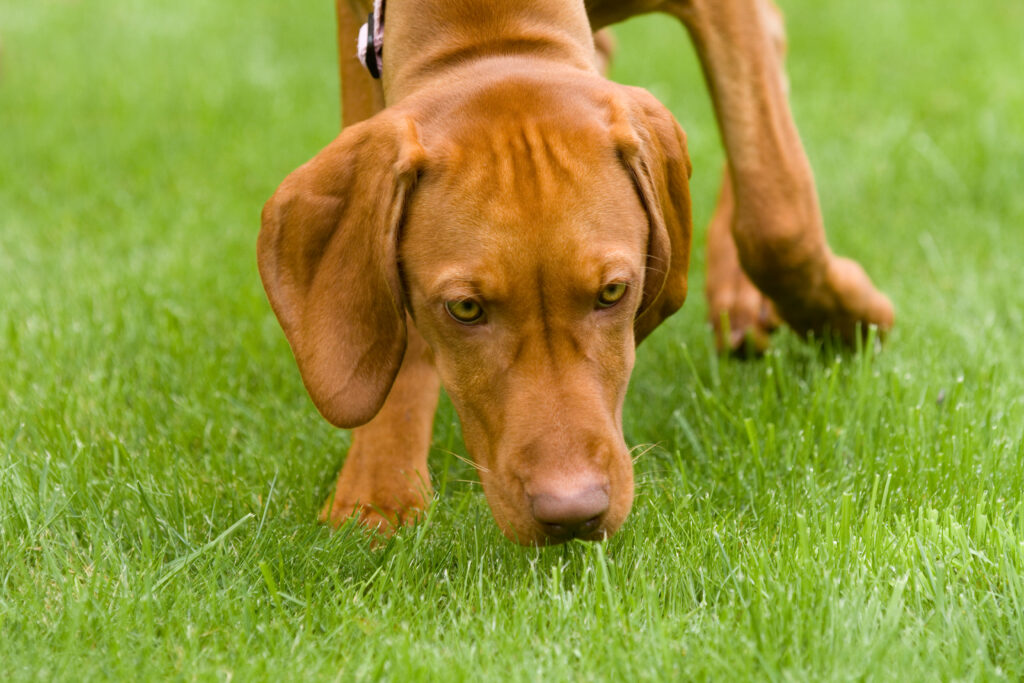
You’ve got somewhere to be. Your dog, meanwhile, has found a particularly fascinating blade of grass.
Then there’s a tree. A fence post. Someone’s letterbox. Another patch of grass that, to you, looks exactly like the first one.
If your dog seems determined to sniff absolutely everything on a walk, they’re not just taking their sweet time. Their nose is one of the main ways they make sense of the world around them.
In fact, that everyday sniffing can tell your dog an incredible amount about where they are, who has been there before them and what might be happening nearby.
Humans tend to rely heavily on what we can see. Dogs are much more scent-focused.
According to veterinarians at VCA Animal Hospitals, dogs have more than 100 million sensory receptor sites in their nasal cavity, compared with around six million in humans. The part of a dog’s brain involved in analysing smells is also considerably larger than ours.
So, while you might walk past a tree and simply think, tree, your dog could be picking up layers of scent left by other animals, people and the surrounding environment.
It helps explain why what looks like a very ordinary walk to us can be a much richer experience for them.
That lamp post your dog refuses to leave alone? There could be plenty of information there.
Dogs use scent as a form of communication. Smells left behind by other dogs and animals can give them clues about who has passed through an area and what is happening around them.
VCA even compares sniffing on walks to checking social media updates — your dog may effectively be catching up on the latest neighbourhood activity through scent.
Suddenly that five-minute investigation of the nature strip makes a little more sense.
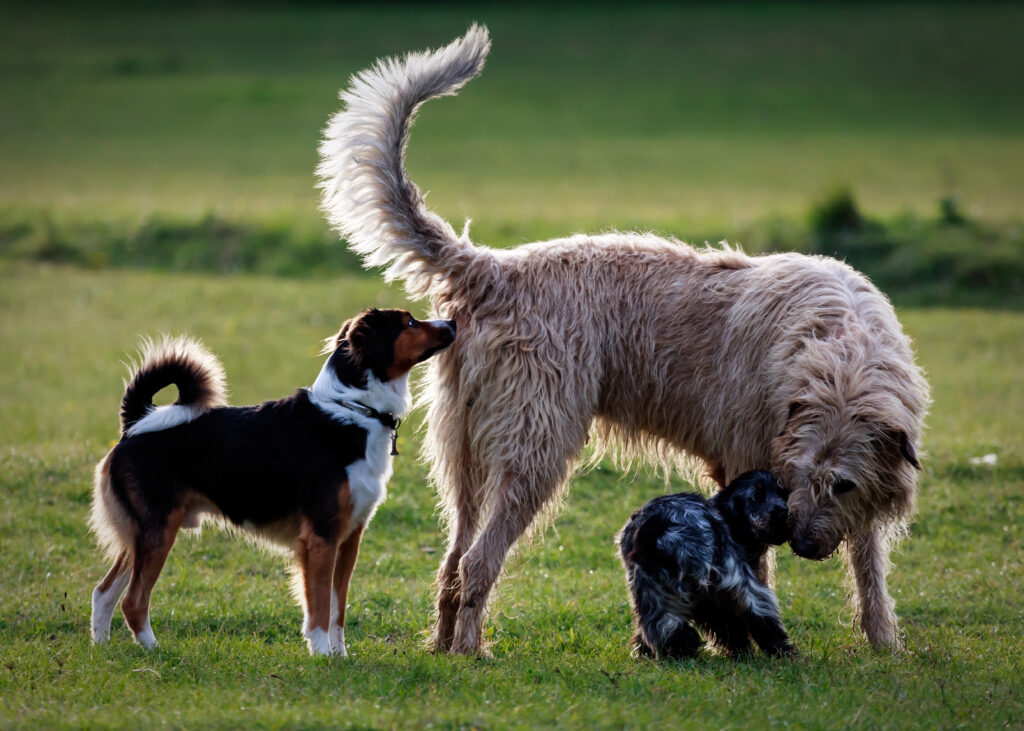
If your dog meets another dog and immediately heads towards their rear end, it might not seem like the most polite introduction by human standards.
For dogs, however, scent is an important part of meeting and communicating with one another.
Veterinarians explain that dogs can gather information through scent produced by another dog, including information associated with their identity and biological state.
In other words, while we might start with “Hi, nice to meet you”, dogs have their own considerably sniffier version.
Walks aren’t only about clocking up kilometres.
Allowing your dog time to sniff gives their brain something to do as well. Veterinary behaviour professionals recommend enrichment activities that encourage natural behaviours such as sniffing, searching and exploring.
A relaxed “sniff walk” can therefore look quite different from a brisk exercise walk.
Rather than constantly encouraging your dog to keep moving, you might occasionally let them choose the pace and spend a little longer investigating interesting smells.
You may travel a shorter distance, but your dog can still come home having had plenty to think about.
You don’t need an exciting walking trail to put your dog’s nose to work.
Simple scent-based activities at home can include:
Veterinary behaviour specialists note that foraging toys can provide both mental and physical stimulation while encouraging natural behaviours including sniffing and searching.
Start easy so your dog understands the game, then make things gradually more challenging once they get the hang of it.
Within reason, giving your dog opportunities to sniff is a good thing.
That doesn’t mean they need to investigate every object for ten minutes while you stand patiently in the rain. There will still be times when you need them to keep moving.
A nice balance can be having some walks that are more exercise-focused and others where your dog gets extra time to explore.
You can even introduce a cue such as “go sniff” so your dog starts to understand when they have permission to slow down and investigate.
While sniffing itself is completely normal, changes in your dog’s usual behaviour are worth noticing.
For example, speak with your vet if your dog suddenly seems unusually reluctant to walk, appears uncomfortable when lowering their head, repeatedly paws at their nose, has nasal discharge, struggles to breathe normally or shows another change that concerns you.
You know what is normal for your dog, so a noticeable change is always worth paying attention to.
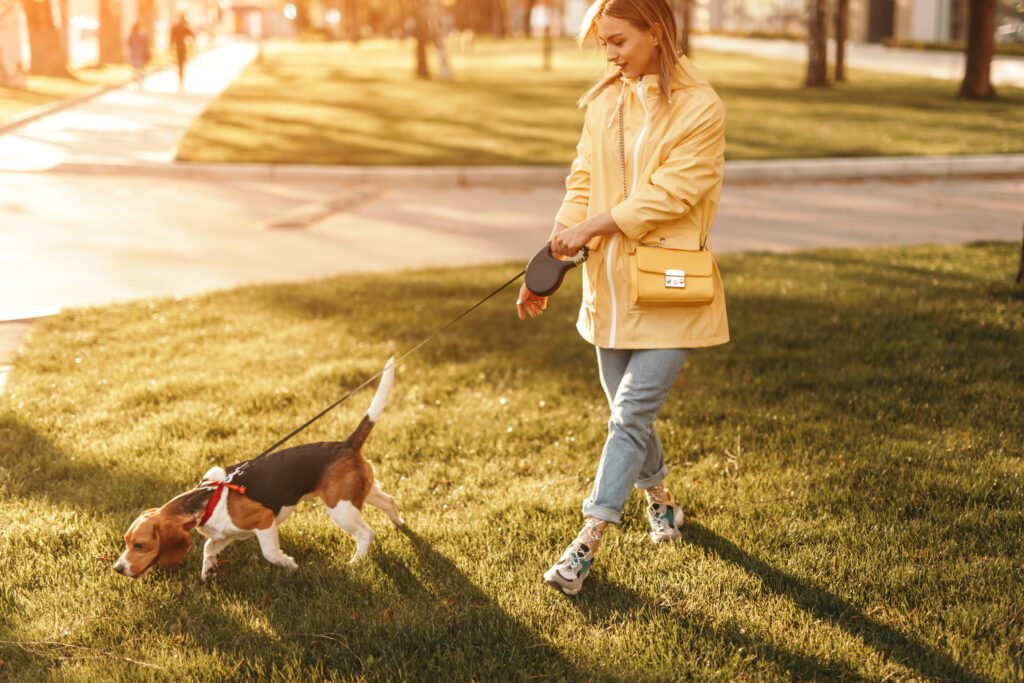
For us, a walk around the block might be fairly uneventful.
For your dog, it can be a constantly changing collection of smells, messages and discoveries. So next time your dog stops for yet another lengthy inspection of a seemingly ordinary patch of grass, giving them an extra moment could be worthwhile.
They’re not necessarily dawdling.
They might just be catching up on everything you walked straight past.