
Brown puppy held by a girl
What is the best cheap pet insurance?
Learn how to find the best cheap cover for your dog or cat without sacrificing quality.
Read more23 March 2026
Quick links
Ask ten cat owners whether cats should live indoors or outdoors, and you’ll probably get ten different opinions. The truth is, there’s no single right answer. Both lifestyles come with genuine benefits and real risks, and the best choice depends on your cat, your home, and where you live. What matters is that you understand the trade-offs so you can make an informed call – and take steps to keep your cat as safe and healthy as possible either way. Let’s break it down.
| Indoor cats | Outdoor cats |
|---|---|
| Longer average lifespan | More physical stimulation |
| Lower risk of accidents and injury | Natural hunting and roaming behaviour |
| No exposure to parasites or toxins outdoors | Less likely to develop boredom-related issues |
| Risk of boredom, obesity and behavioural issues | Exposed to traffic, fights, disease and toxins |
| Requires active enrichment from owners | Higher likelihood of vet visits from injuries |
Indoor cats live longer – on average, significantly longer. While outdoor cats in Australia typically live around 5–7 years, well-cared-for indoor cats commonly reach 12–18 years. That gap is almost entirely down to the risks they’re not exposed to.
Roads, dogs, wildlife and neighbouring cats with a grudge – none of these are a factor for a cat who never goes outside. The most common causes of serious injury and sudden death in cats (traffic accidents and animal attacks) are essentially removed from the equation.
Fleas, ticks, intestinal worms and ear mites are all largely prevented when a cat doesn’t have access to the outdoors. You’ll still want to keep up with parasite prevention as a precaution, but the exposure risk is dramatically reduced.
Diseases like Feline Immunodeficiency Virus (FIV) and Feline Leukaemia Virus (FeLV) are primarily spread through contact with infected cats — usually through bites. Indoor cats who don’t encounter unknown cats have very low exposure to these conditions.
Backyards and surrounding areas can contain surprising hazards — snail bait, rat poison, toxic plants, fertilisers, pool chemicals. Cats who stay inside don’t encounter any of it.
There’s also the argument that keeping cats indoors is also the environmentally responsible choice. Cats are highly effective hunters, and even well-fed domestic cats can impact native wildlife populations – something that matters especially in Australia.
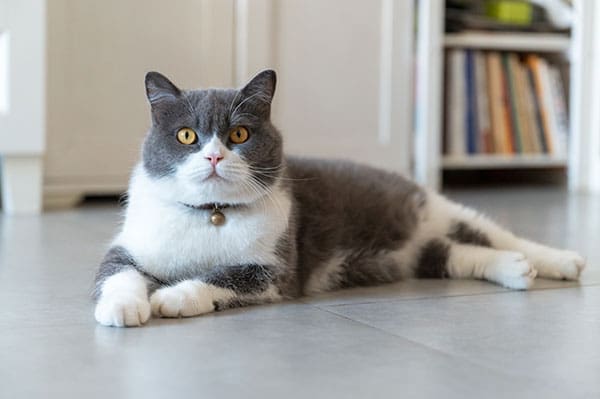
Indoor cats live longer, safer lives – but only if their owners put in the effort to keep them mentally and physically stimulated. A bored, under-exercised indoor cat is an unhappy cat, and that has real health consequences.
Cats are natural hunters. Without stimulation, they can become destructive, anxious, overly vocal, or start over-grooming. These aren’t personality flaws – they’re a signal that a cat’s needs aren’t being met.
Indoor cats move less. Without the natural activity of roaming and hunting, it’s easy for them to pile on weight – especially if they’re free-fed dry food. Obesity in cats significantly increases the risk of diabetes, arthritis and urinary problems.
Indoor cats rely entirely on you for toileting. That means consistent litter tray maintenance and enough trays for the number of cats in your home (the general rule is one tray per cat, plus one extra). Lapses in hygiene can lead to cats refusing to use the tray – and finding alternatives you won’t appreciate.
Cats evolved to roam, hunt, and explore. For many cats – particularly those who grew up with outdoor access – being confined indoors genuinely affects their quality of life. There are real benefits to outdoor access when it’s managed safely.
Stalking, climbing, sniffing, patrolling territory – outdoor cats engage in a rich range of natural behaviours that are hard to fully replicate inside. For cats with a strong prey drive, outdoor time can be genuinely fulfilling in a way that indoor play doesn’t always satisfy.
Cats with outdoor access naturally move more. Running, jumping, and exploring all contribute to better cardiovascular health, healthy muscle tone, and a lower risk of obesity – without the owner needing to orchestrate every activity.
Some cats – particularly those who lived outdoors before being rehomed – can become stressed, anxious or frustrated when confined. For these cats, supervised outdoor access or a contained outdoor space can meaningfully improve their wellbeing.
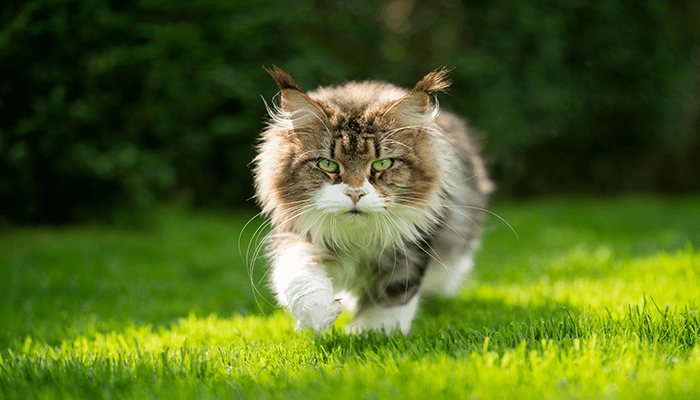
Outdoor life is enriching for cats – but it comes with hazards that are worth understanding clearly, not to scare cat owners, but because knowing the risks is the first step to managing them.
Road trauma is one of the leading causes of injury and death in outdoor cats in Australia. The risk is highest at night and in areas with fast-moving or heavy traffic. Cats have no concept of roads, and even experienced outdoor cats can be caught off guard.
Encounters with neighbourhood cats, dogs, foxes and even snakes are common in many parts of Australia. Cat fights cause painful wounds that can become infected and abscess – and bites are the primary route of transmission for FIV, for which there’s no cure.
Fleas, ticks, intestinal worms, ringworm – outdoor cats have ongoing exposure to all of them. In tick-prone areas of Australia, paralysis tick is a serious and potentially life-threatening risk that requires diligent prevention. Diseases like cat flu, feline parvovirus and FeLV can also be picked up from contact with infected cats or contaminated environments.
Council-laid baits, snail and slug pellets, rat poison, and toxic plants are common in residential areas and can be fatal if ingested. Anticoagulant rodenticides (used in rat and mouse baits) are a particular concern — symptoms can appear days after exposure, by which time significant damage has already occurred.
If you think your cat may have ingested something toxic, contact your vet or the Animal Poisons Helpline Australia (1300 TOX PET / 1300 869 738) immediately. Don’t wait for symptoms to appear.
More and more Australian cat owners are landing somewhere between fully indoor and fully free-roaming — and it’s a genuinely good option. A well-designed cat enclosure (or ‘catio’) gives cats fresh air, sunlight and the ability to observe and smell the outside world while keeping them completely safe from roads, other animals and toxins. Leash training is another option that works surprisingly well for some cats.
On pure statistics, indoor cats live longer, safer lives. The absence of traffic, disease transmission, predators and toxins makes a measurable difference to lifespan and serious injury rates.
But length of life isn’t the only measure of a good life. A bored, sedentary indoor cat who’s never mentally stimulated isn’t thriving – just surviving. And for some cats, particularly those with strong outdoor instincts, restricted access genuinely affects their quality of life.
The healthiest cat is one whose physical safety and mental wellbeing are both taken seriously. For most Australian cat owners, that means either a well-enriched indoor environment, a safely contained outdoor space, or a thoughtfully managed combination of both.
Get cat insurance quote